Friday, October 8, 2010

High Classical Sculpture

5th Century
Polykleitos (artist) Spear Bearer
Pliny the Elder (author), Natural History, chapters on the history of art
Canon of Proportions - based on the head, developed by Polykleitos
(copy because of the base and the tree trunk, not in bronze)

Pliny the Elder, author, died in the eruption of Mt. Vesuvius
(in text reader)

Classical 4th Century Sculpture-Late Classical

Mausoleum of Halikarnasos (Turkey)
Classical 4th Century
square base, raised up as a pyramid, sculptural group on top of horses and the couple in a chariot, decorated by the greeks

1 of the 7 wonders of the ancient world
Mausolos, Persian satrap
Wife Artemisia

Sculpture from the Mausoleum of Halikarnasos
smaller head, persians (bigger body), idealized, but more of a portrait, no more wet drapery, wool clothing, deeper inset of eyes which makes them look sad, contrasting textures

Frieze from the Mausoleum of Halikarnasos
fighting the Amazons, amazon girl is being shown nude

CHANGES:
Different proportions
Deeper carved eyes
Female nudity
Contrasting textures


Praxiteles (artist) Hermes and the Infant Dionysos
Temple of Hera, Olympia
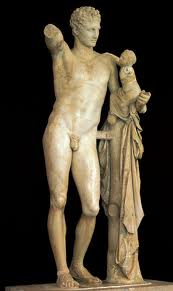
is it a copy or not? baby of Zeus, due to an affair, given to Hermes the messenger, dangling grapes in front of Dionysos (god of wine), S curve-trademark of Praxiteles

Praxiteles (artist) Aphrodite of Knidos
copy, female nudity, Aphrodite is often nude because she embodies perfection, ready for a bath

Lysippos (artist) Scraper-using a strigil)
Canon of Proportions
cleaning himself, Lysippos is credited for writing down canon of proportions and for making truly 3D sculptures

Lysippos (artist), Weary Herakales
copy, larger than the original, Herakles carries the lion skin and the club, apples in his hand


Wednesday, October 6, 2010

High Classical Art: Athens Acropolis

Early Classical-Temple of Zeus, Olympia
-expressionless, idealized, athletic build, peplos dress (plain), broad cheeks, big chins, few details, "severe style"

High Classical-Acropolis, Athens
-more details, prettier faces, finer details and facial structure

Acropolis

Perikles (architect), Periklean building program
Athens Acropolis (high city, old citadel, religious center)
High Classical 450-400 BC
Marble
Four Buildings:
Nike Temple (tiny temple, temple to Athena nike (victory)) - tiny building by entry way
Propylaia (opening, entry gate) - far left, upper portion, in grey
Erechtheion (Erecthius's palace, legendary)
Parthenon (Athena as virgin) - large grey building, upper portion

Temple of Athena Nike
Acropolis
Athens
Ionic 

Nike Temple frieze
battle, shown nude (didn't fight nude, makes them look heroic), shows fighting easterners, most likely persians, most likely the Marathon battle

Nike Temple parapet and bastion
Nike-shown as a winged figure of victory, (later an angel), taking off sandal to show that it is sacred ground
Nike offers a trophy to athena (athena is athens)
Victory of the Athenians over the Persians-war monument

Evolution in the art:
Wet drapery-shows body underneath, clings to body

Propyleia
(Front Gate)
Exterior-Doric
Interior-Ionic

Erectheion
Acropolis
Athens
Used to be a frieze, 3 porches, unusual place for a building, ionic
Change in ground line, trying to enclose several sacred places (palace of Erecthius, olive tree, and broken rock from Poseidon, statue of Athena-wore wood and real clothing)
Athena Polios - Athena of the City

Caryatid Porch
Erectheion
Contopposto

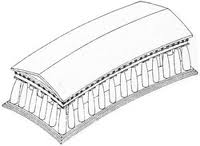
Parthenon
Temple of Athena
Acropolis
Athens
Exterior-doric
Interior-doric and ionic
highly decorated, continuous frieze


Parthenon Optical Refinements
Stylobate curvature
bulge in center of columns, no 90 degree angles
Can see the curvature if you are looking for it

West pediment
Competition between Athena and Poseidon
composition of the "V" - reference to Athens at its high point

East Pediment
Birth of Athena
trying to show time of day, Athena was born at dawn, so the chariot is bringing the sun
some experimentation

Three Goddesses of the East Pediment

METOPES
South: Lapis fighting the Centaur
West: Greeks fighting Amazons
North: Greeks fighting Trojans
East: Gods fighting Giants
Greek Victory!

Parthenon Frieze: Panathenaic Procession


Panathenaic Festival Frieze
Parthenon
Acropolis, Athens


Pihdias
Athena Parthanon
Model of the lost chryselephantine statue
gold


Monday, October 4, 2010

Transitional or Early Classical Greek Art and Athletics

Kritios Boy is dated around 480 BC. But this date is debated because of a battle.

Battle of Marathon, 490 BC
Persians invaded the Greeks
Greeks defeat them
Marathon based on the messenger who ran to tell the greeks not to worry.
Persians invade again, 480 BC
Battle at Thermopylae 479: Athens sacked
Stopped by 300 Spartans - eventually all 300 are killed.
"Go tell the Spartans, strangers passing by
That obedient to their laws, we lie."
Persians destroy everything.
Beat the Persian fleet at sea.
Persians don't invade again.

Early Classical 480-450

Charioteer
Delphi
Early Classical 470 BC
Bronze
contrapposto stance, can't see legs though

zoomed in 
severe style, big, strong, eyelashes, copper on lips, korous, big chin, no indentation at top of nose

Myron (artist) Discus Thrower
Early Classical
Many different angles of the body, pent up energy, Myronian

All we have are copies of Myron's bronze statue. Romans copied much of greek art in marble. Marble needs support, but bronze doesn't. Romans often used tree trunks as support.

Point Process-way of copying a statue

Sanctuary of Zeus at Olympia
Greece
plan

model
people read the inscriptions aloud (as is the statues are alive)

Temple of Zeus at Olympia
Libon of Elis Architect
Early Classical 470 BC

East pediment from the Temple of Zeus
Olympia
Marble
Chariot Race of Pelops and Oinomaos
walking into the temple
race to he death, Oinomaos has a sacred chariot
Pelops replaces Oinomaos's pin with wax, so he wins. 
He kills Oinomaos and marries the girl.

Figure from the East Pediment
balding, has a belly, wrinkles-very unusual, old seeer (can see the future)

Wet Pediment (back Side)
Temple Of Zeus
OlympiaEarly Classical
Lapiths and Centaurs
expressionless, not a lot of detail

Metopes
Temple of Zeus
Olympia
Early Classical
12 Labors of Herakles
myth influenced by the art

Athena, Herkales, and Atlas
metope from the Temple of Zeus
Olympia
Early Classical
last labor, he outsmarts atlas

Statue of Zeus
Olympia
Pheidias (artisit)
High Classical
Chryselephantine-gold and ivory
One hand with scepter


Friday, October 1, 2010

Ancient Greek Sculpture-Geometric-Archaic

Ancient Greek Sculpture

Geometric
Bronze Horse
British Museum
London
Geometric
Bronze Horse
Metropolitan
Museum, NY

Hero and Centaur
Geometric Period
Bronze
Metro Museum, NY


Lady of Auxerre
Orientalizing period
Limestone Louvre
Daedallic Style (after Daedalus)
Blocky, unproprtioned, would have been painted

Temple A
Prinas, Crete
Orientalizing


Male statues-shows muscles-kouroi
Female-shows the body beneath the clothing-korai
completely 3 dimensional statues
simular to egyptian sculptural

Berlin Kore
Keratea
Archaic Period
Funerary Kore-grave marker
painted
out of proportion, not as egyptian

Peplos Kore
Acropolis
Athens, Greece
Archaic
Marble
old fashioned dress, more proportioned, shows body better, painted, less tacky smile

Kore
Acrolpolis
Athens, Greece
Archaic Period


La Delicata
Acropolis
Athens
Archaic
facing down, less smile, defined eyes

New York Kouros
Archaic
early sculpture because its out of proportion, not as defined muscles

Calf Bearer
Acropolis
Archaic
Not Kouros because he has  beard


Kroisos Kouros
Anavysos
Funerary-grave marker
Greece
Archaic Period
Marble
More naturalistic, better muscle detail, bent arms

Kritios Boy
Acropolis, Athens
Marble
Contrapposto-counter balance (stance in picture)